What Makes an Asset Management Company Worth Considering? Look Beyond the Brand Name
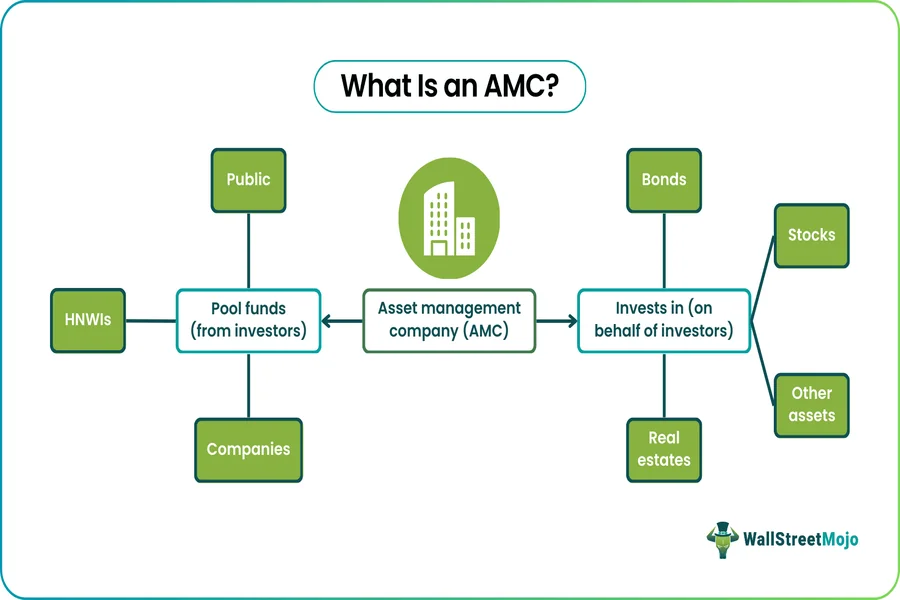
A familiar name can make a financial product feel easier to trust. In mutual funds, however, the brand is only the visible layer. The asset management company is responsible for running schemes within their stated mandates, while trustees, custodians, registrars and regulators perform separate oversight and operational roles.
Start with the investment process
A credible asset management company should be able to explain how investment decisions are made. For active funds, this includes research, security selection, portfolio construction and risk controls. The process should be clear enough to understand without depending on vague claims about expertise.
Consistency does not mean every scheme will perform well in every market. It means the approach described in the scheme documents can be recognised in the portfolio and in the way the fund house communicates during difficult periods.
Frequent unexplained changes in style may deserve attention.
Examine governance and regulatory history
Mutual funds operate within a regulated structure, but regulation does not make every organisation identical. Publicly available regulatory orders, disclosures and notices can provide context about past lapses and how they were addressed.
The role of trustees is also relevant. They oversee the mutual fund and monitor whether schemes are run in accordance with regulations and stated objectives. The custodian holds securities separately from the AMC’s own assets, while the registrar and transfer agent maintains records and processes investor transactions.
Understanding this structure helps separate institutional safeguards from marketing reputation.
Look for stability in the investment team
A fund is managed by people, supported by analysts, dealers and risk teams. Repeated turnover in key roles can disrupt continuity, especially where a scheme depends heavily on a particular style or manager.
One departure should not be treated automatically as a warning. Teams evolve. The useful questions are whether the process is broader than one individual, whether responsibilities are disclosed and whether succession appears orderly.
For passive funds, operational capability and tracking discipline may matter more than the personality of a fund manager.
Judge performance with the right context
An AMC with one recently successful scheme is not necessarily stronger than one with a steadier record across market phases. Performance should be reviewed scheme by scheme because each has a different mandate and benchmark.
Look at risk-adjusted results, consistency across periods, downside behaviour and whether returns were driven by concentrated exposure. Past performance may or may not be sustained, but it can show how the stated process behaved under different conditions.
Avoid treating the fund house’s total assets or number of awards as a substitute for scheme-level analysis.
Costs and execution matter quietly
Expense ratios reduce returns before the investor receives them. Portfolio turnover, trading efficiency and cash management can also influence outcomes. For index funds and ETFs, tracking difference is a useful measure of how closely the scheme has followed its benchmark after costs.
Low cost alone does not establish suitability, but unexplained high costs deserve comparison. Direct and Regular plans should also be distinguished because distributor commission affects the expense ratio.
Investor communication reveals the culture
Clear fact sheets, timely portfolio disclosures and readable scheme documents make it easier to understand what is owned and why. Communication becomes particularly valuable when markets are volatile or a scheme undergoes a material change.
An AMC should describe risks as plainly as potential opportunities. Prominent return numbers paired with buried qualifications can make an investor’s job harder. Good communication does not remove risk; it reduces avoidable confusion.
Service quality also matters. Transaction processing, account updates, complaint handling and access to support affect the experience even when portfolio management is sound.
Product range should have a purpose
A large collection of mutual funds can offer choice, but too many overlapping schemes may make selection difficult. Review whether each category has a distinct role and whether new launches appear connected to a coherent capability rather than only to recent market interest.
The presence of many products does not mean an investor needs several from the same AMC. Diversification should be assessed at portfolio level, including overlap in stocks, sectors and styles.
Financial strength is relevant, but not a return guarantee
The sponsor and AMC need adequate resources to support research, technology, compliance and service. Financial commitment can matter operationally. It does not guarantee that a scheme will outperform or protect capital.
Assets under management may indicate scale, but scale brings both advantages and constraints. Large funds may have broader resources, while some strategies can become harder to execute as assets grow.
Trust should be built from evidence
A trustworthy impression should come from several observable qualities: a disciplined process, stable teams, transparent communication, reasonable costs, responsive service and a sound regulatory record.
Even then, the choice remains scheme-specific. A well-run AMC can offer a fund that does not fit a particular goal, risk appetite or horizon. Looking beyond the brand name helps place confidence where it belongs: in the structure and behaviour of the organisation, not in an expectation of assured returns.
Mutual Fund investments are subject to market risks, read all scheme related documents carefully
This document should not be treated as endorsement of the views/opinions or as investment advice. This document should not be construed as a research report or a recommendation to buy or sell any security. This document is for information purpose only and should not be construed as a promise on minimum returns or safeguard of capital. This document alone is not sufficient and should not be used for the development or implementation of an investment strategy. The recipient should note and understand that the information provided above may not contain all the material aspects relevant for making an investment decision. Investors are advised to consult their own investment advisor before making any investment decision in light of their risk appetite, investment goals and horizon. This information is subject to change without any prior notice.
The content herein has been prepared on the basis of publicly available information believed to be reliable. However, Bajaj Asset Management Limited (formerly known as Bajaj Finserv Asset Management Limited) does not guarantee the accuracy of such information, assure its completeness or warrant such information will not be changed. The tax information (if any) in this article is based on prevailing laws at the time of publishing the article and is subject to change. Please consult a tax professional or refer to the latest regulations for up-to-date information.


 By
By