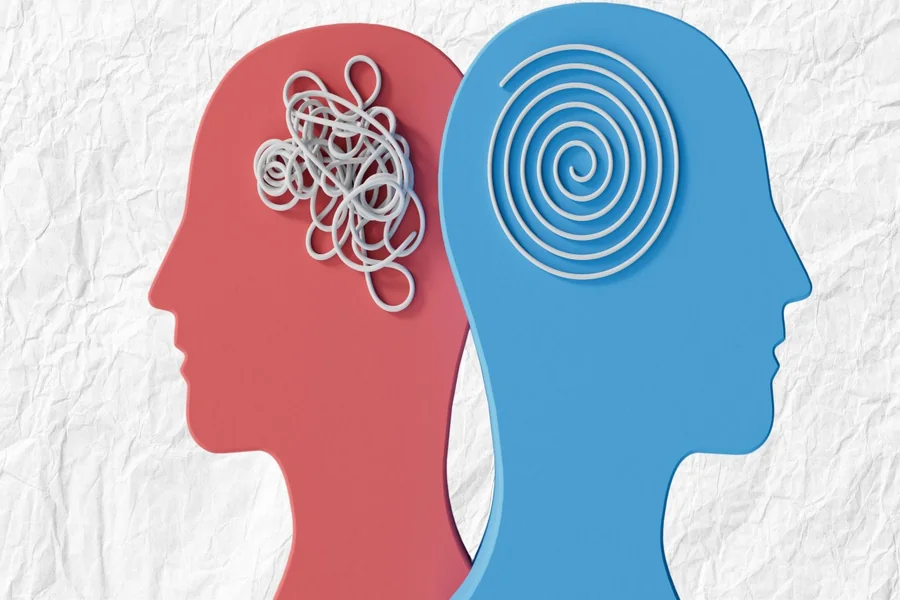
People experience thousands of regular outcomes every day. The average return from investments is the most common outcome. The vast majority of athletes have a fairly good but mundane career. The majority of social media posts get overlooked. In games of chance, most players get what chance predicts they will get. But we usually don’t talk about everyday things.
Rather, we remember the start-up that turned into a billion-dollar company, the talented musician who went from zero to hero in a matter of hours, or the lucky millionaire who won the jackpot on PlayBaze Denmarkand had it posted on the web within hours. When things are excellent, they’re in the headlines; when they are average, they are in the background.
The Psychology Behind Our Fascination
We know that people overestimate rare events. Behavioral economics has documented many cognitive biases that explain this.
Availability Heuristic
The more memorable an event is, the more common we think it is. A great success story lives on in the memory of the years. But hundreds of mundane possibilities pass into nothingness almost instantaneously.
The one case in which a business succeeds in a remarkable way is usually the one thing that matters more than statistics indicating that most businesses grow slowly or don’t even grow up to a particular size.
Survivorship Bias
Winners are the ones we hear from. Few film documentaries or interviews cover failed experiments, unsuccessful creators, or abandoned projects. This phenomenon means that individuals only see the successes and do not recognise the number of the normal attempts.
Emotional Weight
Emotionally charged experiences take on more significance in our brains. Unexpected events, risk, achievement and extraordinary luck kindle more emotional reactions, and their intensity makes them easier to remember and talk about.
The Neuroscience of Exceptional Outcomes
The fascination with the outlier precedes conscious thought.
Dopamine Loves Novelty
Unexpected events evoke strong responses in the brain’s reward system. Dopamine is not the same as the ‘pleasure chemical’ as you might think. It is pivotal in learning, motivation, and reward prediction.
Variable Rewards Create Strong Engagement
The more unpredictable the outcomes, the more people pay attention. Rather than being bored, people are generally more engaged, as the uncertainty provides excitement.
This phenomenon has been seen in numerous digital spaces, such as social media feeds, video platforms, video games, and countless online activities that involve intermittent reinforcement.
Average Outcomes appear invisible
Generally average performance does not evoke a strong emotional response. It is uncommon to see a headline that reads, ‘Company earns expected quarterly revenue.’ All news platforms spread the idea of “unknown startups tripling in value overnight.” Surprise beats predictability.
Digital Platforms amplify outliers
Modern digital ecosystems are not just the reflection of human psychology; they amplify it.
Engagement is given high priority in recommendations, and novelty can precede engagement.
Viral videos perform better than normal uploads.
Digging into the extremes gets more engagement than balanced viewpoints. Consistent
Performance is not enough; record-breaking performances create more clicks. As algorithms learn from users’ behaviour, they make increasingly specific content recommendations that lead to extraordinary results. This is a vicious cycle that perpetuates the notion that extraordinary events are more common than they actually are. This is an online space in which averages are virtually invisible.
Familiar Patterns in Gambling-Adjacent Environments
These psychological dynamics are not just limited to casinos but are well known in the world of gambling. There is a reason why promotion campaigns usually feature out-of-the-ordinary victories: Outstanding stories do get noticed.
This phenomenon is seen all over entertainment, financial, sports, and digital media. If you’re reading about National Casino or looking at engaging, compelling casino discussions, you may see that the public tends to take the short-term wins and losses of games like responsible gambling tools into account, rather than focusing on the average experience.
Expert Assessment
Outliers are not irrational, as they are not just some occurrence of random chance, from a behavioural economics and neuroscience point of view. This seems to be a survival mechanism from ancient times that biases towards novel, uncertain and emotionally charged events. But in the digital world today, these instincts are amplified by recommendation algorithms, constant notifications and by the careful design of reward structures.
These factors, coupled with cognitive bias and wanting to get something now, can make great results look more likely than they really are, and decision fatigue makes things even worse.


 By
By
 By
By